
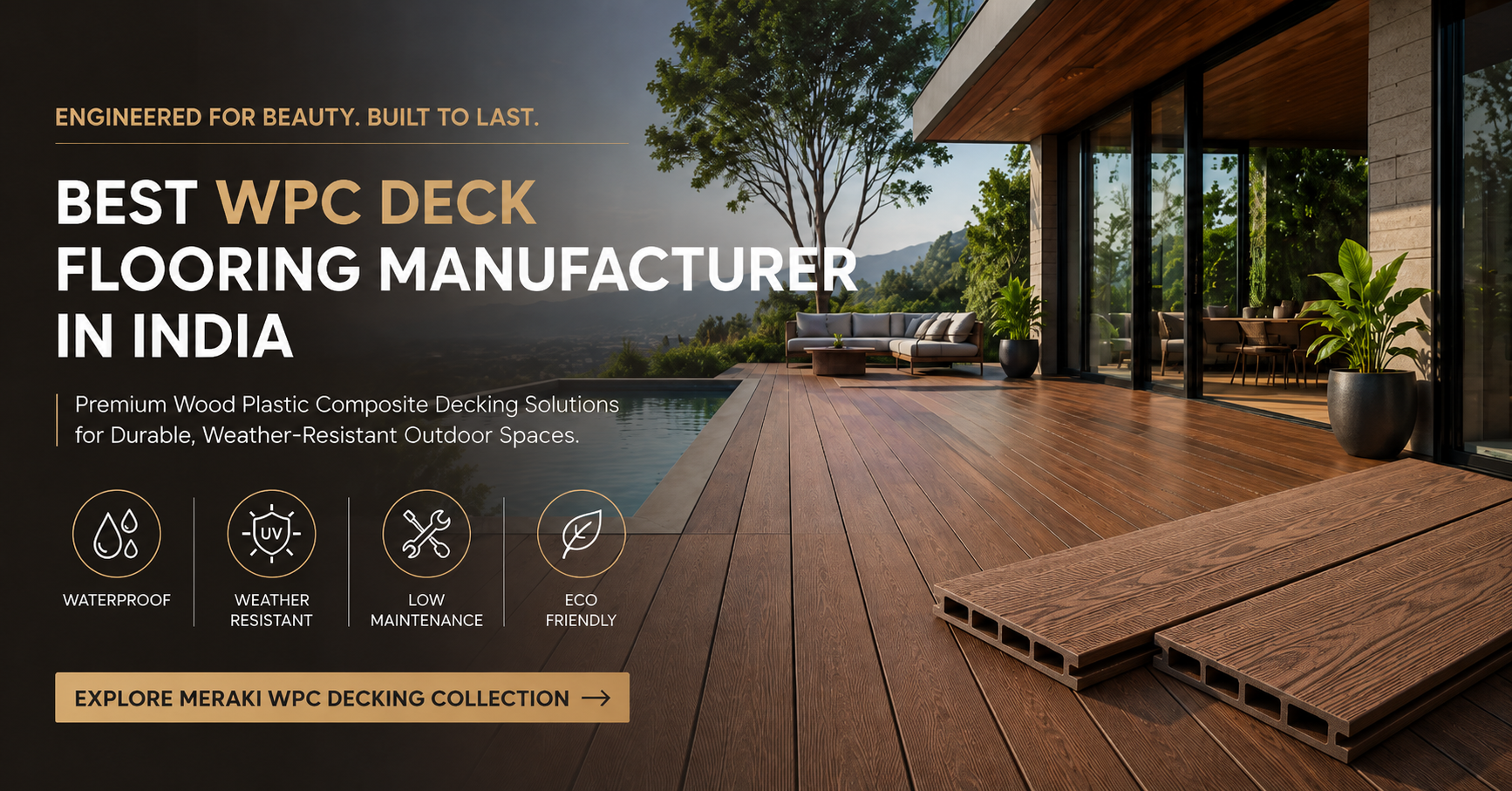
The tension regarding every outdoor flooring brief is the same: the client wants the warmth of natural wood, but no-one wants the maintenance headache that goes with it. Six months after handover, a beautifully detailed timber deck can already show cupping, fading, or termite damage. That callback lands on the designer's desk, not the contractor's.
This gap between what client’s picture and what timber decking can realistically deliver is exactly why WPC (Wood Plastic Composite) decking has become the go-to specification for architects and interior designers across India. It holds the visual language of wood while removing the variables that make timber risky to specify for long-term outdoor use.
But specifying WPC decking is only half the decision. The bigger question is which manufacturer can actually back that performance consistently, across batches, and across projects.
Natural wood decking looks beautiful on day one. The challenge shows up over time, like cracking under UV exposure, swelling during monsoons, and the ongoing cost of sanding, sealing, and replacing damaged planks. WPC decking solves this at the material level. It's engineered to handle moisture, temperature swings, and foot traffic without losing structural or visual integrity, which makes it far easier to specify with confidence for long-term projects. For designers, this translates into fewer callbacks, fewer maintenance complaints from clients, and a product that performs the way it looks in the render years after installation.
Not all WPC decking is built the same. When evaluating manufacturers, architects and designers should be assessing:
• Weather resistance -the ability to withstand harsh sun, heavy rain, and humidity without fading or cracking
• Dimensional stability - minimal expansion or contraction across seasons, especially important in India's varied climate zones
• Surface finish options - wood-grain textures that hold up visually against natural timber, so the material doesn't read as a "composite compromise"
• Consistency across batches - critical for large-format projects where colour and texture mismatch between deck sections is a visible flaw
• Technical support - manufacturers who understand installation detailing, expansion gaps, and substructure requirements make site execution smoother
A manufacturer who can speak to these points with technical clarity — rather than just marketing language - is usually the one worth specifying.
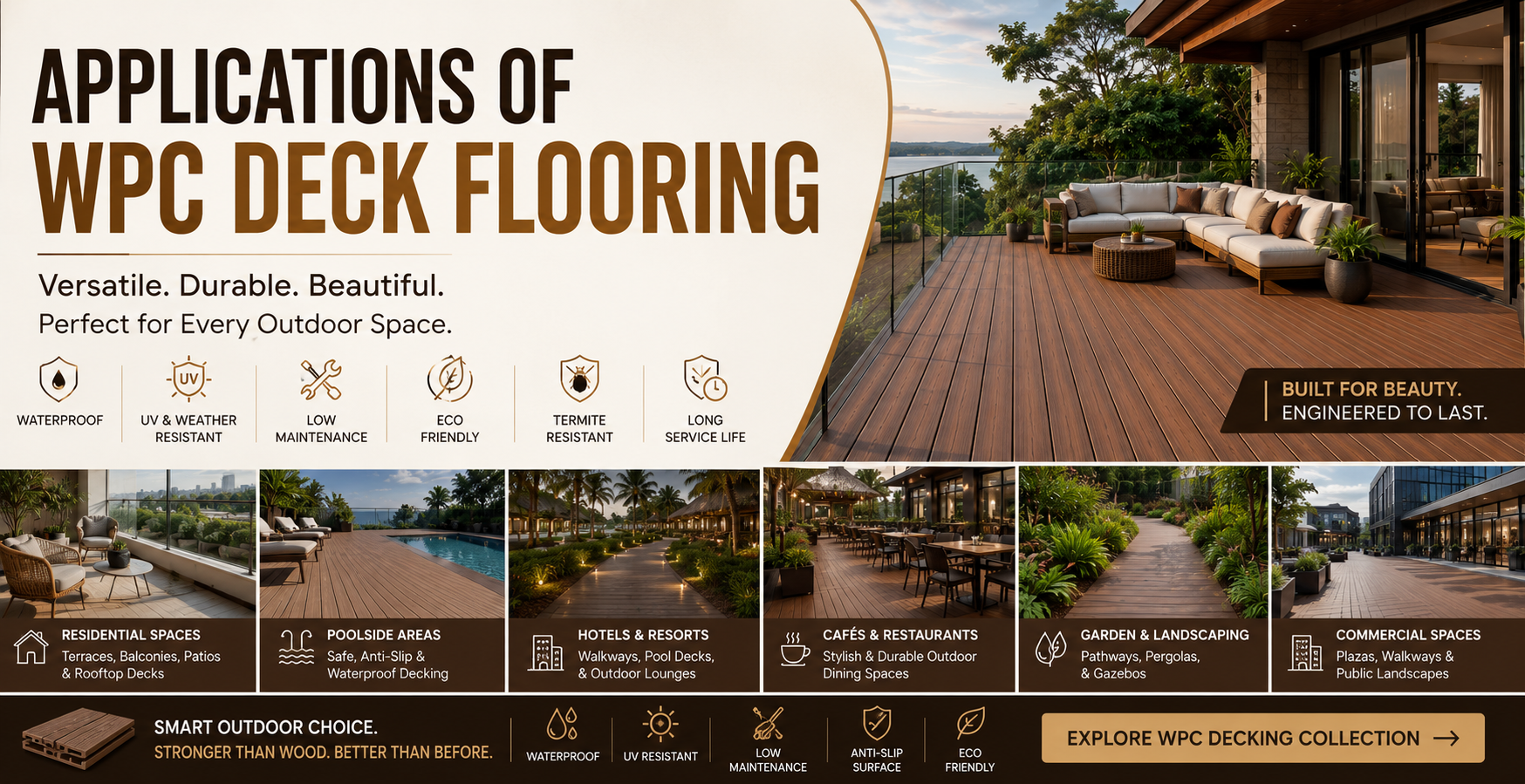
At Meraki, our decking offering is built on the same design philosophy that runs through our broader laminate and surface portfolio: materials that are engineered to perform under real conditions, not just showroom lighting.
For projects that call for a wood-finish outdoor surface, Meraki offers a curated range of wooden shades designed to replicate the warmth of natural timber while holding up to outdoor exposure. The focus is on giving designers a palette that integrates seamlessly with both contemporary and traditional architectural language - so the decking complements the design intent rather than fighting it.
For architects and interior designers, choosing a WPC decking partner isn't just about the sample board - it's about whether the material holds up across seasons, scales consistently across projects, and gives you a finish you can stand behind during client walkthroughs.
That's the standard Meraki builds toward, project after project.